
The following women’s clothing size chart is a general reference for tops, dresses, and similar apparel. Measurements are approximate body measurements and can differ by brand, garment design, and country.
Example reference chart for general fit guidance. Check the retailer’s own chart before purchasing.
Vyrelle+1
| Size | Bust (inches) | Waist (inches) | Hips (inches) |
| XS | 32 | 26 | 35 |
| S | 34 | 28 | 37 |
| M | 36 | 30 | 39 |
| L | 38 | 32 | 41 |
| XL | 40 | 34 | 43 |
| XXL | 42 | 36 | 45 |
These measurements are a starting point, not a universal standard. For example, one brand’s medium may fit differently from another brand’s medium.
Women’s Clothing Size Conversion Chart
Women’s clothing sizes are often displayed using different systems, including Indian, UK, US, and European sizing. Conversion charts can help when shopping from international brands.
| India / UK Size (Approx.) | US Size (Approx.) | EU Size (Approx.) |
| UK 6 | US 2 | EU 34 |
| UK 8 | US 4 | EU 36 |
| UK 10 | US 6 | EU 38 |
| UK 12 | US 8 | EU 40 |
| UK 14 | US 10 | EU 42 |
| UK 16 | US 12 | EU 44 |
| UK 18 | US 14 | EU 46 |
International conversions are approximate. Some Indian retailers use numeric sizes based on bust measurements in inches, so confirm the sizing convention on the product page.
How to Measure Your Body for a Women’s Clothing Size Chart
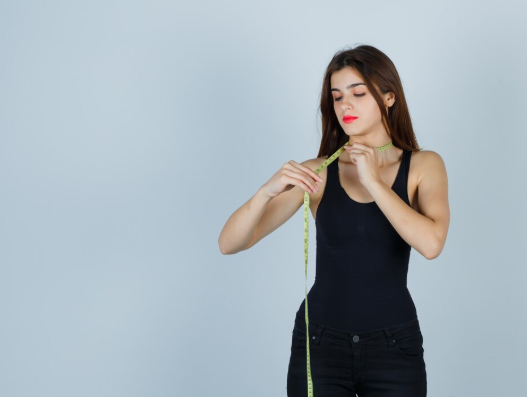
Taking accurate body measurements is one of the easiest ways to select the correct clothing size, especially when shopping online.
How to Measure Bust
Wrap a soft measuring tape around the fullest part of your bust. Keep the tape level across your back and under your arms. It should be snug without compressing your body.
Bust measurements are important for selecting tops, blouses, shirts, and dresses.
How to Measure Waist
Measure around your natural waist, usually the narrower area of your torso. Keep the tape comfortably close to your body without pulling it too tightly.
Waist measurements are useful when choosing trousers, skirts, fitted dresses, and high-waisted clothing.
How to Measure Hips
Place the measuring tape around the fullest part of your hips and seat. Stand naturally with your feet close together and ensure the tape remains level.
Hip measurements are especially important for jeans, skirts, trousers, and fitted dresses.
How to Measure Inseam
For trousers and jeans, measure from the crotch seam down the inside of the leg to the desired hem length. Inseam measurements help determine whether a garment will be full-length, cropped, or require alterations.
Women’s Clothing Size Chart for Different Garments
Not every clothing item uses the same measurements. The most important measurement depends on the garment’s design.
| Clothing Type | Key Measurements to Check |
| Tops and Shirts | Bust, shoulder, sleeve length |
| Dresses | Bust, waist, hips, garment length |
| Jeans | Waist, hips, inseam |
| Trousers | Waist, hips, inseam |
| Skirts | Waist, hips, length |
| Kurtis | Bust, shoulder, hip, length |
| Blouses | Bust, underbust, shoulder, sleeve |
| Jackets | Bust, shoulder, sleeve length |
For Indian ethnic wear, checking garment length and shoulder measurements can be particularly helpful. Blouses and fitted kurtis may require more detailed measurements than relaxed garments.

Choosing the right clothing size can improve comfort, fit, and overall appearance. Here are several useful tips to help you select the right size.
- Use your latest measurements: Body measurements can change, so take them again before shopping.
- Check the brand’s size chart: Do not assume that your size is identical across all brands.
- Consider the fabric: Stretch fabrics may fit differently from rigid materials such as non-stretch denim.
- Review the garment style: Relaxed-fit and oversized designs may have different measurements from fitted clothing.
- Check product descriptions: Look for details such as model measurements, garment length, and fit type.
- Read customer reviews: Reviews can sometimes indicate whether a garment runs small, large, or true to size.
- Choose comfort: Clothing should allow natural movement without uncomfortable tightness.
If your measurements fall between two sizes, consider the garment’s fit and fabric. For fitted, non-stretch clothing, choosing the larger size may provide more comfort.
Common Women’s Clothing Size Chart Mistakes
Many shoppers experience sizing problems because they rely on labels instead of actual measurements.
| Common Mistake | Better Approach |
| Choosing a size based only on XS, S, M, or L | Compare body measurements with the size chart |
| Using an old measurement | Take fresh measurements before ordering |
| Ignoring hip measurements | Check bust, waist, and hips where relevant |
| Assuming all brands use the same sizing | Follow the brand-specific chart |
| Confusing body measurements with garment measurements | Identify which measurements the chart provides |
| Ignoring clothing length | Check length and inseam for dresses and trousers |
| Not checking return policies | Review exchange and return conditions before purchase |
Understanding these common mistakes can help shoppers reduce sizing errors and make more confident clothing purchases.
Frequently Asked Questions About Women’s Clothing Size Chart
What is a women’s clothing size chart?
A women’s clothing size chart is a reference table that connects clothing sizes such as XS, S, M, L, and XL with body measurements. It usually includes bust, waist, and hip measurements to help customers choose suitable clothing.
How do I know my women’s clothing size?
Measure your bust, waist, and hips using a soft measuring tape. Compare these measurements with the size chart provided by the clothing brand. The best size depends on the garment and the brand’s sizing system.
Is a women’s size M the same in every brand?
No. A medium size may vary between clothing brands and countries. Some brands use different measurement ranges or garment proportions, so checking the specific size chart is important.
How do Indian women’s clothing sizes compare with US sizes?
Indian and US clothing sizes may use different numeric and letter labels. General conversion charts can provide an approximate comparison, but actual bust, waist, and hip measurements are more reliable than size labels alone.
What measurements are needed for a women’s clothing size chart?
The most common measurements are bust, waist, and hips. Depending on the garment, shoulder width, sleeve length, inseam, and overall garment length may also be required.
Conclusion
A women’s clothing size chart is an essential guide for finding comfortable and well-fitting apparel. By understanding bust, waist, hip, and garment measurements, shoppers can make better decisions when purchasing tops, dresses, jeans, trousers, kurtis, and other clothing items. International size conversions can be useful, but brand-specific charts should always take priority. Taking accurate measurements, checking product details, and considering fabric and fit can reduce sizing mistakes, especially when shopping online. Ultimately, the best clothing size is the one that provides comfort, confidence, and the fit you prefer.